aiiStudio
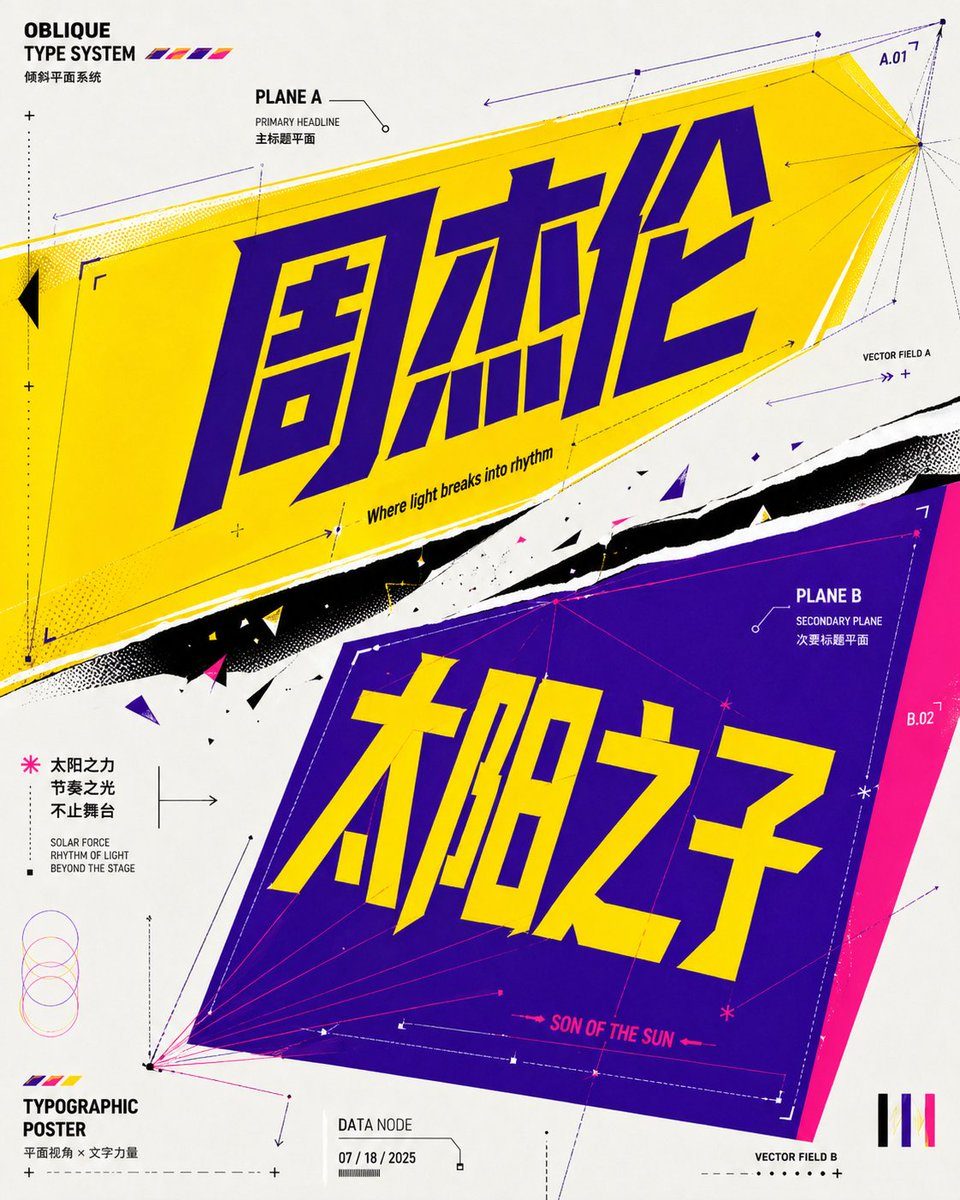
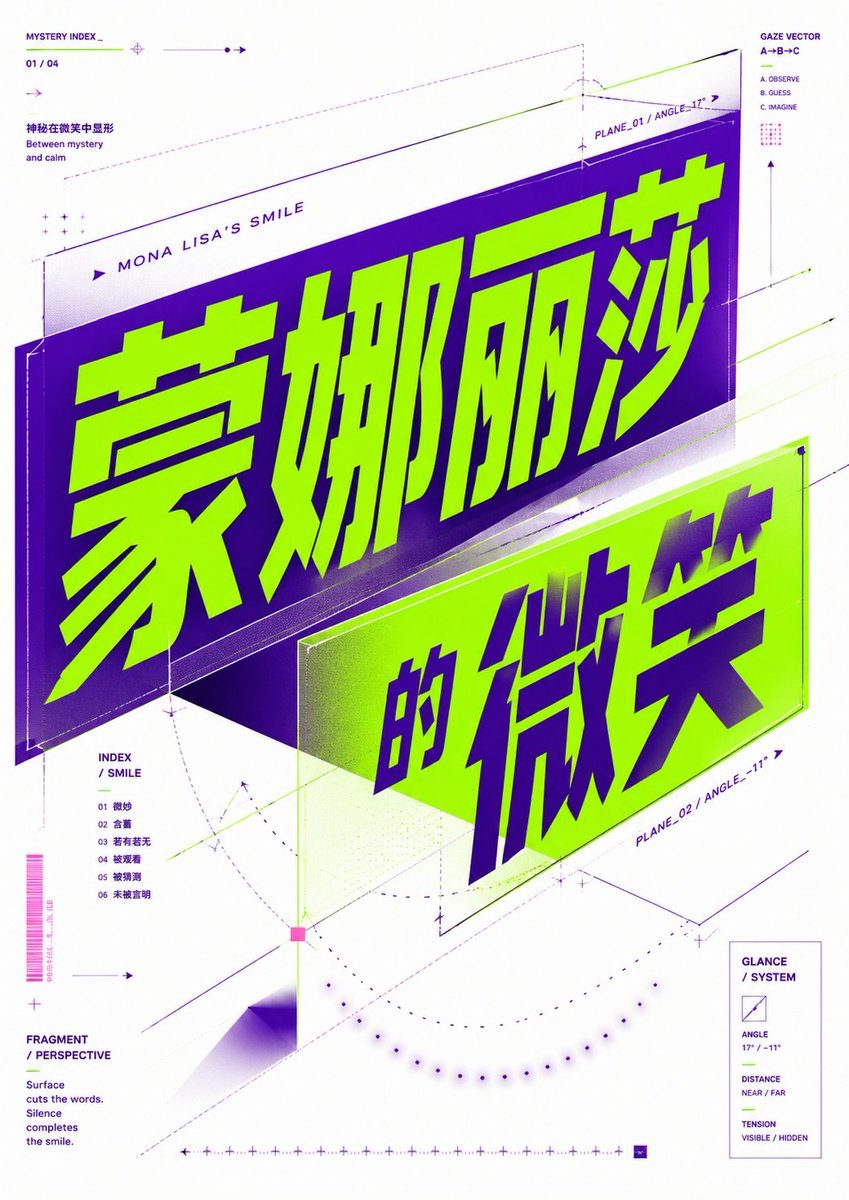
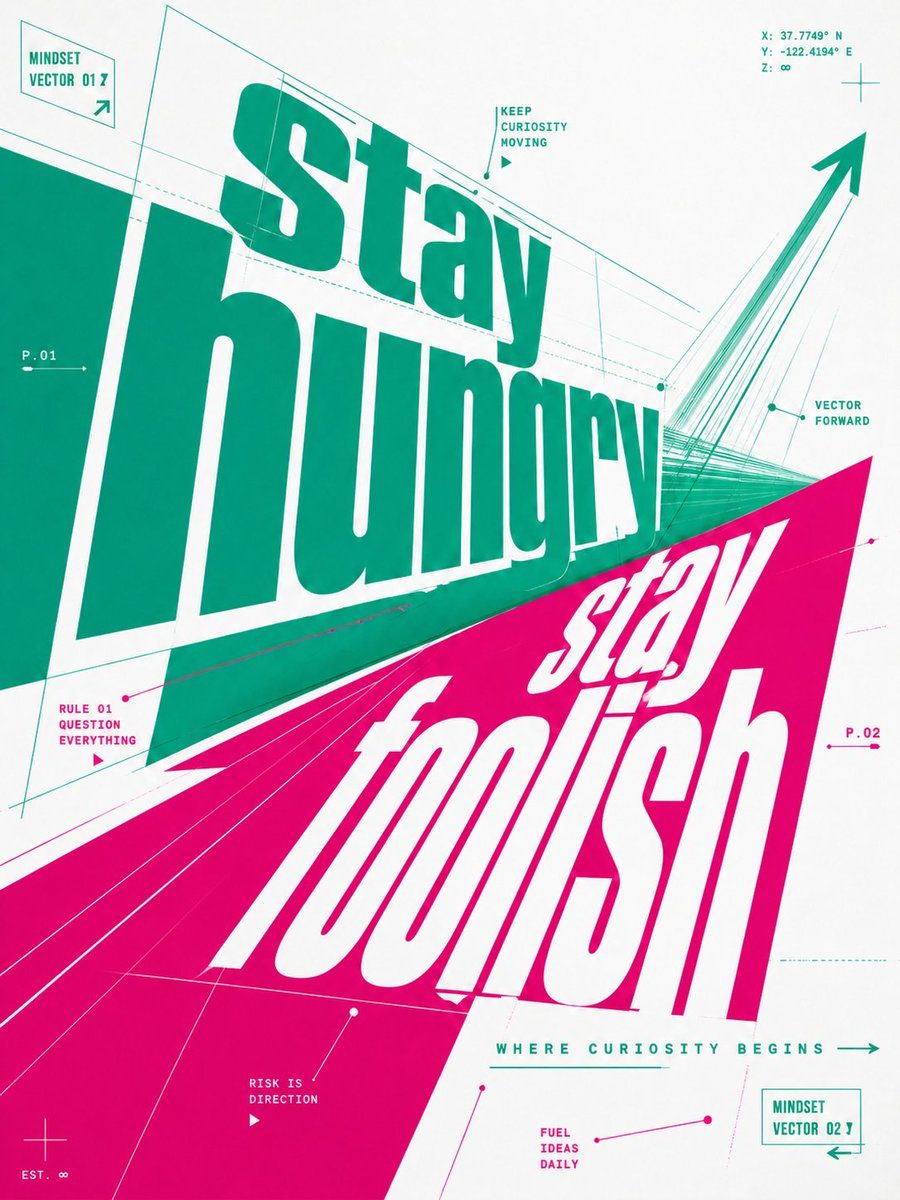

Based on the user's input [core text / word / phrase / short sentence / letters], create a high-completion 'Oblique Planar Perspective Typographic Poster.'

User input: [theme text];
Text language: [Chinese / English / mixed];
Optional contextual notes: [____];
Optional emotional inclination: [____];
Optional forbidden elements: [____].

This is not an ordinary illustration, not a simple text-magnified type effect, and not a traditional flat front-facing layout. It is a modern experimental type poster with 'text as the main visual core.' The overall design must use 'Oblique Planar Perspective Typography': text should not lie completely flat on the front plane, but rather be placed as if on multiple 2D planes at different tilt angles, using oblique baselines, perspective compression, planar deflection, angled cuts, displaced compositions, vector pointing, directional lines, semi-transparent geometric planes, and modular color blocks to create a typographic system that is 'still flat design but with clear angle, spatial direction, visual tension, and vector relationships.'

First truly understand the literal meaning, emotional temperament, implicit symbolism, cultural associations, psychological feelings, and semantic tension of the user's input, then translate that understanding into a typographic poster system with 'directionality, oblique relationships, planar perspective, and visual confrontation/connection.' If the theme is more emotional, focus on expressing it through oblique text-plane distance relations, weight shifts, negative-space direction, line flow, modular density variations, and color-block compression/release. If the theme is more action-oriented, focus on oblique forward thrust, speed lines, directional arrows, perspective slices, displaced planes, and vector trajectories. If the theme is more relational, focus on the angle differences, intersection, overlap, confrontation, wrapping, cutting, and intermediary structures between multiple text subjects, geometric planes, and graphic modules. If the theme is more abstract, first find a concise abstract metaphor with strong visual translation potential, then use oblique perspective text, vector aux systems, partial occlusion, layer offsetting, modular repetition, and deformation grids to build the image.

The overall image must be a modern, sharp, bright, fashionable, experimental, viral, memorable, high-completion typographic poster. The user's text must be the primary visual subject — the core content of the entire poster. Text can be horizontal, vertical, split, displaced, grouped, recombined, partially cropped, partially occluded, nested, tilted, perspective-compressed, oblique-rotated, or even placed on different angle planes, but must always remain highly recognizable and clearly readable. Viewers must clearly feel: text is no longer flat-front, but has entered a planar spatial system composed of multiple tilted planes and directional relationships.

Emphasize these style features: text with a sense of oblique angle, near-large-far-small planar perspective, vector relationships in various directions, oblique baselines, helper arrows, geometric facets, modular forward push, partial border lines, data-feel labels, small directory-style aux notes, a few dot-arrays and path lines. Different texts or text groups can sit on different tilted planes, forming perspective differences, directional conflict, visual dialogue, or tension. Graphic elements must support text, not act as independent decoration; they should support, slice, wrap, extend the direction of text, and reinforce its oblique momentum, forming a complete visual sentence with the text.

Visual language: modern graphic design, oblique planar perspective typography, experimental typography, bold typographic composition, flat vector aesthetics, high-contrast graphic layout, contemporary editorial poster, crisp vector-like precision. Overall, this is not photographic, not retro literary, not vintage Bauhaus, not heavy-texture, not gloomy art-poster, and not a generic PowerPoint cover. It should be more contemporary, brighter, sharper, more digital, with the feel of a design-firm pitch and exhibition poster.

[New color requirements]
Colors must be bright, transparent, clear, vivid, and high-contrast — but do not default to the blue-orange combination, and don't fall into common blue-orange clashing schemes. Based on the theme's semantics, emotional temperament, and visual metaphor, automatically generate a bolder, more imaginative, fresher modern high-contrast palette. Allow unconventional combinations, jumpy colors, strong clashes, cool/warm conflicts, neon, digital, futuristic, or artistic palettes — but the whole must remain ordered, aesthetically controlled, and design-savvy.

Prioritize a '2 main colors + 1–2 accent colors + negative-space/anchor color' composition. Explore directions including but not limited to: fluorescent green + magenta + cool white; bright yellow + violet + black; lime green + deep purple + cyan-blue; rose red + cyan-green + silver white; cherry red + lake blue + pure white; mint green + bright red + deep blue; fluorescent yellow + peach + purple; coral orange + cyan-blue + white; multicolor digital splice palettes. Each generation should form a distinct color memory; do not repeat a single fixed palette or make a series of works look like the same image with different text.

Text colors should not all be pure black; let different text subjects use different highly saturated colors, or assign primary/secondary colors within the same big-text group. A small amount of dark color is allowed as a structural anchor, but the overall impression should be bright, clear, vivid, and avant-garde. Color should serve semantic expression, not just liveliness — viewers should feel the colors are 'designed,' not random piles.

Composition should be bold, oblique, with thrust and direction, while maintaining order. Suggest: 1 group of core title subjects, 1 group of oblique perspective text-plane systems, 1 group of geometric vectors and color-block structures, plus a small amount of supporting labels and dot-line markings. Leave enough negative space so high-saturation colors and oblique text have breathing room and exhibition-poster feel. Add a few small descriptions, tags, numbers, English keywords, ultra-minimalist subtitles, or short sentences to reinforce the concept, but stay restrained and don't steal focus from the main title. Aux info can mimic the annotation language of identity systems or editorial design — short words, parameters, indices, directional notes, concept tags, etc.

Fonts and layout must be modern, clear, bold, powerful, and somewhat experimental. Chinese works well with geometric sans, modern design titles, narrow-tall forms, or facet-cut forms; English works well with bold grotesk, condensed sans, geometric sans, editorial sans, etc. Allow local stretch, compression, oblique cuts, perspective deformation, slice displacement — but no real 3D extruded text, no heavy drop shadows, no real 3D modeling, no metal text, no glass text, no embossed text. Emphasize 'spatial feel within flat,' not 'physical 3D solidity.'

Graphic elements: oblique rectangles, tilted plane frames, triangle cut-outs, dot systems, arrows, path lines, thin auxiliary grids, perspective borders, directional vectors, dot-array modules, data-feel short lines, color block patches, semi-transparent geometric slices, partial circular lines, section labels, small-size index info. These elements must serve theme semantics and typographic composition, not be pure decoration.

Avoid these issues: do not make a generic flat-front type poster, traditional minimalist layout, photo or illustration realism, heavy 3D type, retro low-saturation/beige posters; do not pile unrelated graphics; do not over-decorate; do not make text unreadable; do not let the image become messy or crowded; do not let graphics disconnect from the theme; do not repeatedly default to the same color scheme.

If appropriate, auto-generate a very short subtitle or concept short sentence to support the theme, e.g., 'Between ____ and ____,' 'The tension of ____,' 'A state of ____,' 'Where ____ begins,' or a more concise Chinese phrase based on Chinese context — keep it short, restrained, designed.

Final output should be: a high-completion, modern, bright, high-contrast, flat, sharp, experimental, oblique-perspective typographic poster — readable and design-rich, with bolder freer, more imaginative colors that don't fall into a fixed blue-orange formula.